Quick answer
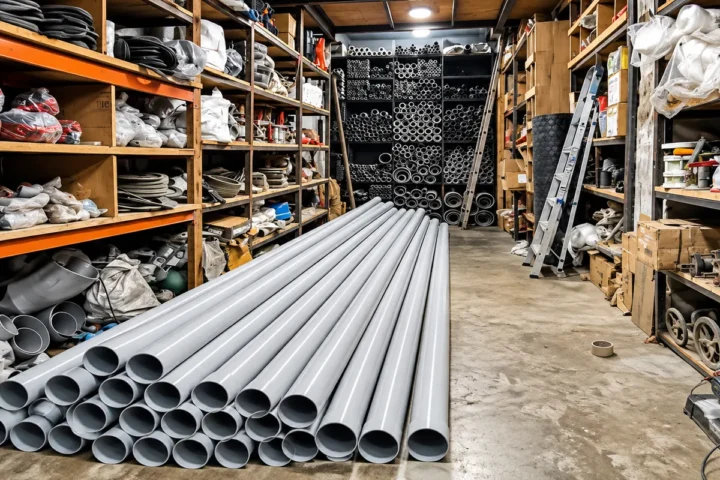
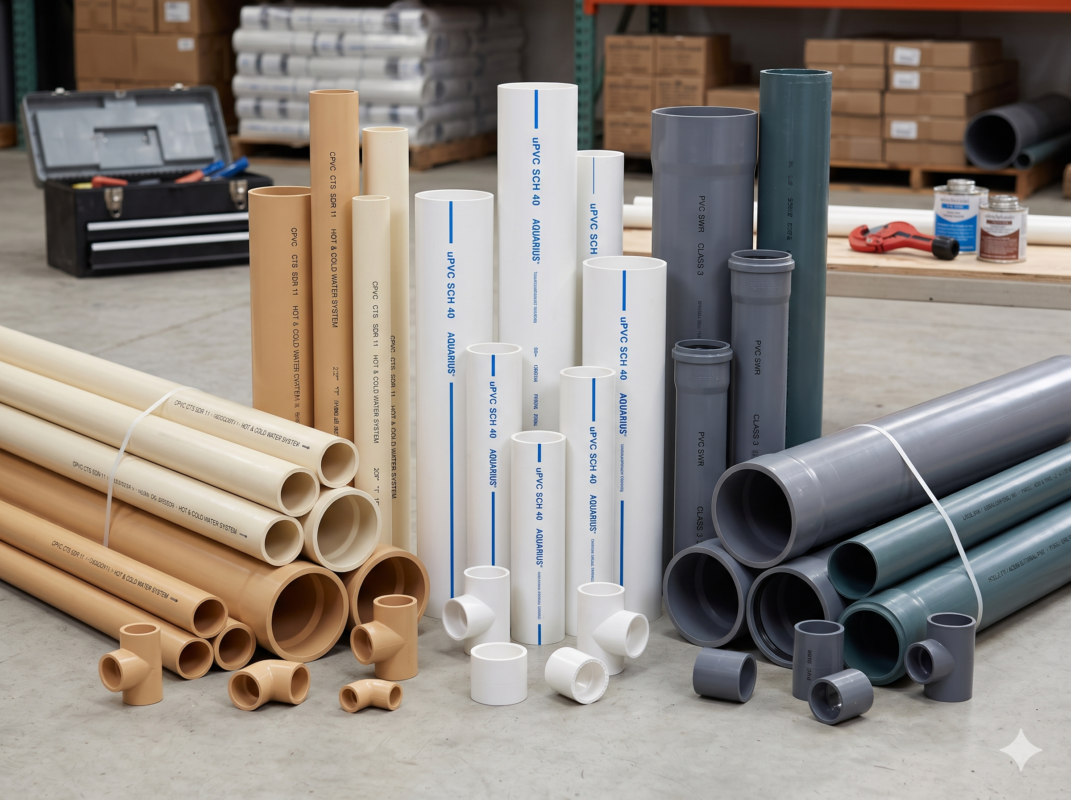
Use CPVC for any line that carries hot water, such as geyser and kitchen hot lines. Use lead-free UPVC for cold water lines like tank connections and outdoor taps. Use PVC SWR pipes for drainage from toilets, bathrooms, kitchens and roofs. Most homes in Chandigarh, Mohali and Panchkula use all three, each in its own place.
At our counter in Industrial Area Phase 2, Chandigarh, the question we hear most often is some version of “which pipe should I use?” The honest answer is that there is no single best pipe. Each type is made for a specific job, and the trouble usually starts when one type is used for another job. Here is how we explain it to homeowners and new plumbers.
CPVC pipes: for hot and cold water
CPVC (chlorinated PVC) is made to handle hot water. That makes it the default choice for geyser lines, bathroom mixers and kitchen hot water points. It is also used for cold water, so many people plumb the whole bathroom in CPVC to keep things simple.
- Joined with CPVC solvent cement, no threading needed
- Does not rust or scale up like old GI pipes
- Comes in pressure classes such as SDR 11 and SDR 13.5
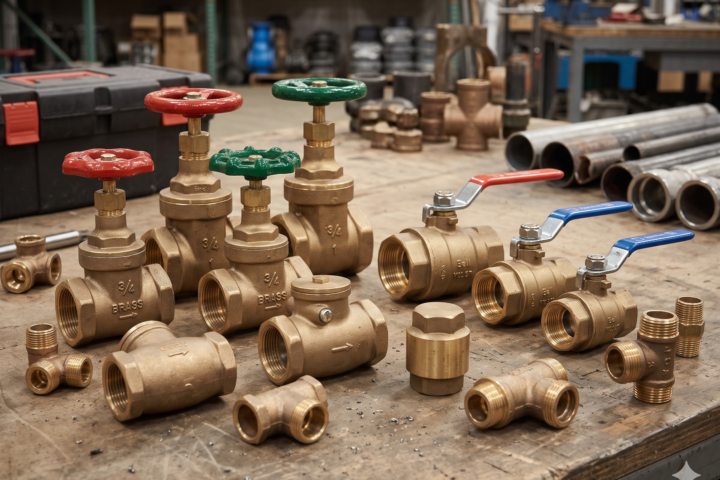
- Connects to taps and valves through brass threaded adaptors
We stock Astral CPVC and Prince FlowGuard Plus CPVC with full fitting ranges.
UPVC pipes: for cold water
UPVC (unplasticised PVC) is a strong, economical pipe for cold water. Lead-free UPVC, such as Astral Aquarius, is suitable for drinking water. It is widely used from the overhead tank down to each floor, for terrace lines and for garden taps.
- Cold water only. Do not connect it to a geyser outlet.
- Available in Schedule 40 and Schedule 80 thicknesses
- Joined with UPVC solvent cement, which is different from CPVC cement
PVC SWR pipes: for drainage
SWR stands for soil, waste and rainwater. These pipes are designed for gravity flow, not pressure. They carry waste from toilets, bathroom floor drains, kitchen sinks and roof rainwater down to the sewer line. SWR pipes come with their own range of bends, tees, traps and door elbows, and use ring-fit or self-fit joints.
Side by side comparison
| Pipe | Best for | Hot water | Joint type |
|---|---|---|---|
| CPVC | Hot and cold water supply inside the house | Yes | CPVC solvent cement |
| UPVC (lead-free) | Cold water, tank lines, terrace and garden | No | UPVC solvent cement |
| PVC SWR | Soil, waste and rainwater drainage | Not for supply lines | Ring-fit or self-fit |
| PVC pressure pipe | Agriculture, borewell rising mains, water supply | No | Solvent or ring joints |
Mistakes we see often
- UPVC on a geyser line. It may work for a while and then soften or crack. Use CPVC.
- The wrong solvent cement. CPVC and UPVC cements are not interchangeable. A wrong cement is a common reason for joints leaking after a few weeks.
- Mixing brands at the joint. Pipe and fittings from the same brand fit to the same tolerance. Mixing can leave a loose joint.
- Using pressure pipe for drainage. It is costlier and the fittings are wrong for drainage. Use SWR.
What a typical Tricity house uses
For a two or three storey house in Chandigarh, Mohali or Panchkula, a common setup is CPVC for all bathroom and kitchen supply points, UPVC from the overhead tank to the floor headers and for outdoor taps, SWR for every drain and roof outlet, and a PVC pressure pipe if there is a borewell. If you are building, our plumbing material checklist for a new house walks through the full list.
Not sure what your plumber has written on the list? Send it to us on WhatsApp and we will check it, or browse our CPVC, UPVC and PVC pipes page.